

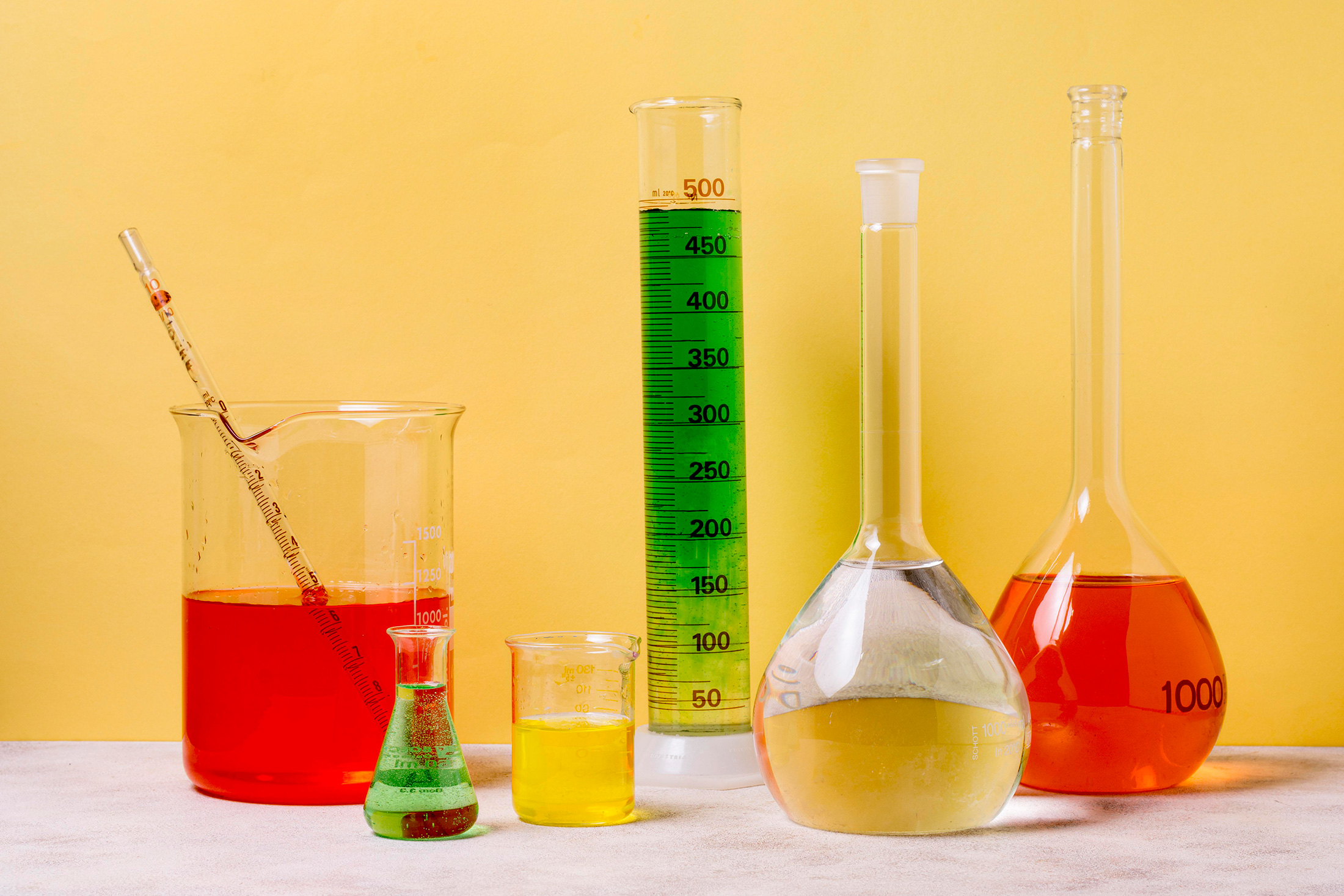
Introduction to Measuring Cylinder
The measuring cylinder is one of the most widely used pieces of laboratory glassware because it allows accurate and repeatable measurements of liquid volumes. Unlike beakers or flasks that provide approximate readings, the measuring cylinder is designed specifically for precision. Its tall and narrow cylindrical shape with etched graduations ensures that scientists, technicians, and students can confidently measure the liquids required for their work. A measuring cylinder is found in almost every laboratory setting, from education and research to pharmaceuticals and industry, because accuracy in volume measurement is fundamental to reliable scientific results.
Design and Features of a Measuring Cylinder
The design of a measuring cylinder balances practicality and accuracy. It is tall and slender, which minimizes error in meniscus reading compared to wider vessels. Each measuring cylinder has evenly spaced graduation marks, often printed or etched, that allow the user to measure specific volumes. Many measuring cylinders feature a wide hexagonal or circular base, which provides stability and reduces the risk of tipping over during use. A spout is typically included at the top of the measuring cylinder to make pouring smoother and to avoid spills. Some advanced models of measuring cylinder also include double scales, reinforced rims, or ergonomic designs that make them more convenient for everyday use.
Materials and Sizes of Measuring Cylinder
The choice of material for a measuring cylinder directly influences its durability and accuracy. Glass measuring cylinders, especially those made from borosilicate glass, are preferred in laboratories where chemical resistance, clarity, and heat resistance are important. They allow clear meniscus readings and maintain accuracy over time. Plastic measuring cylinders, made from materials such as polypropylene or polymethylpentene, are lightweight, shatter-resistant, and economical. Although they may not always match the accuracy of glass, they are widely used in environments where safety and cost are priorities.
Measuring cylinders are available in a wide range of sizes, typically starting from as little as 5 milliliters and extending up to 2 liters. Smaller measuring cylinders are used for precise measurements of small liquid volumes, while larger measuring cylinders are ideal for bulk solutions. Laboratories usually keep several sizes of measuring cylinders on hand so they can match the container to the needs of the experiment. Choosing the right size of measuring cylinder is important, as using a smaller cylinder generally gives better accuracy than filling a large one with a very small quantity of liquid.
Proper Use of a Measuring Cylinder
Using a measuring cylinder correctly is essential for obtaining accurate results. To begin, the measuring cylinder should always be placed on a flat, level surface. Liquids should be poured slowly to avoid splashing or creating air bubbles. The liquid surface forms a curve known as the meniscus, and the correct reading is taken from the lowest point of the meniscus at eye level. Misreading the meniscus is a common source of error when working with a measuring cylinder, but proper technique eliminates this problem.
When measuring, it is also important not to overfill the measuring cylinder beyond the highest graduation mark. Spillage or tilting can lead to inaccurate readings, so handling with care is key. By following these steps, laboratories ensure that the measuring cylinder provides the precision it was designed for.
Applications of Measuring Cylinder in Laboratories
The measuring cylinder is an indispensable tool in laboratories across various fields. In chemical laboratories, it is used for preparing solutions and measuring reagents accurately. In biology, it helps in preparing culture media and diluting samples. Industrial laboratories depend on the measuring cylinder for routine testing, quality control, and production processes. Educational institutions use the measuring cylinder extensively to teach students the fundamentals of measurement and accuracy.
One of the unique applications of a measuring cylinder is in determining the volume of irregular solids using the water displacement method. By immersing an object in water inside a measuring cylinder and observing the increase in liquid level, the exact volume of the object can be calculated. Measuring cylinders are also used in certain experiments to collect gases by displacement, showing their versatility beyond liquid measurement alone.
Key Applications of Measuring Cylinder:
- Preparation of solutions in chemistry and pharmaceuticals
- Measurement of culture media and biological fluids
- Volume determination of irregular solids by displacement
- Gas collection in specific experiments
- Educational training in accurate measurement techniques
These applications highlight the wide scope of the measuring cylinder as a reliable piece of laboratory glassware.
Measuring Cylinder vs Other Laboratory Glassware
When compared with other containers, the measuring cylinder clearly stands out for its accuracy. Beakers and flasks may include volume markings, but these are approximate and not intended for precise measurements. The measuring cylinder, however, is designed solely for volume measurement and provides reliable results within specific tolerances.
For very high accuracy, laboratories may use pipettes or burettes, but these instruments are more specialized and not as versatile as a measuring cylinder. A measuring cylinder offers a balance between accuracy, ease of use, and convenience, making it the go-to option for routine measurement tasks. This is why even in well-equipped laboratories with advanced instruments; the measuring cylinder continues to be a staple piece of equipment.
Care and Maintenance of Measuring Cylinder
Maintaining a measuring cylinder is essential for preserving its accuracy. After each use, the measuring cylinder should be rinsed with distilled water to remove any residues. For stubborn chemicals, a mild detergent may be used, but abrasive cleaners should be avoided as they can scratch the surface of the glass or plastic. Scratches and stains make reading the meniscus more difficult and can eventually reduce accuracy.
Glass measuring cylinders should always be handled with care to avoid chips or cracks, while plastic cylinders should not be exposed to very high temperatures that may warp their shape. Calibration checks are also important for laboratories that rely on precision, as even small deviations can impact experimental results. Proper storage, preferably upright on a stable shelf, keeps the measuring cylinder safe and ready for the next use.
Why Measuring Cylinder Remains Indispensable
Despite the development of advanced measuring instruments, the measuring cylinder remains one of the most reliable and cost-effective tools in any laboratory. Its durability, accuracy, and versatility make it suitable for a wide range of applications. From teaching environments to cutting-edge research, the measuring cylinder provides the confidence that comes with accurate and repeatable volume measurements.
The simple yet effective design of the measuring cylinder has stood the test of time, and its importance shows no sign of diminishing. As laboratories continue to prioritize accuracy and efficiency, the measuring cylinder will remain a central part of scientific practice.

