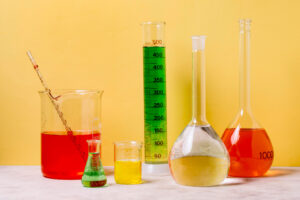


Scientific innovation depends on one thing above all else — precision. In every research lab, pharmaceutical facility, and educational institute, scientists rely on instruments that deliver results they can trust. Behind every successful experiment lies an unsung hero: the laboratory glassware and equipment that make accurate data collection possible.
Manufacturers in this field bear a unique responsibility. Their products are not just tools; they are the foundation upon which discoveries are built. Whether it’s the delicate calibration of a volumetric flask or the durability of a high-performance beaker, every detail matters. Modern glassware manufacturing is no longer an industrial afterthought — it’s a blend of science, craftsmanship, and technology.
The Art and Science of Glassware Manufacturing
Producing laboratory glassware begins with understanding its role in research. Scientists depend on glass that remains stable under extreme conditions — high temperatures, corrosive chemicals, and constant sterilization. This is why borosilicate glass has become the industry standard. It offers exceptional resistance to heat expansion and chemical attack, ensuring that the material retains its structure even after years of use.
In a professional manufacturing environment, each piece of glassware goes through several processes: melting, molding, calibration, annealing, and quality testing. The precision with which the inner diameters, wall thickness, and volumetric markings are executed can determine the outcome of experiments. Automated forming machines combined with skilled craftsmanship promise glassware that meets the highest levels of accuracy and consistency.
The Importance of Accuracy and Calibration
In laboratory research, even a milliliter’s deviation can alter results. This is where precision calibration plays a crucial role. Every burette, pipette, and flask must be carefully measured against certified reference standards. Modern facilities employ digital measuring systems and automated optical testing to ensure every product meets tight tolerance levels.
Calibration isn’t just a regulatory requirement; it’s an ethical commitment to scientific integrity. When a product line is ISO 9001 or ISO/IEC 17025 certified, it signals that the manufacturer values precision as much as the scientist does. Such certification not only enhances credibility but also builds lasting trust among customers who depend on these instruments for critical analysis.
Innovation Driving Modern Laboratory Equipment
Today’s laboratories are evolving faster than ever. Automation, safety, and sustainability have become key focus areas for glassware and equipment manufacturers. Advanced equipment such as temperature-controlled distillation units, vacuum filtration apparatus, and digital titration systems are revolutionizing workflow efficiency.
Manufacturers are integrating smart technologies — sensors, automated control modules, and even Internet of Things connectivity — to deliver more reliable, real-time data. This transformation is helping labs move beyond manual measurement to intelligent, self-calibrating systems that minimize human error and optimize productivity.
At the same time, ergonomic designs and safety features are taking priority. Acid-resistant coatings, shock-proof glass, and flame-polished mouthpieces aren’t just value-added features — they are essential safeguards that reduce accident risks in busy laboratories.
Quality Assurance: The Manufacturer’s Signature
True excellence in manufacturing comes from a deep commitment to quality assurance. The process doesn’t end with production; it extends into inspection, testing, and documentation. Manufacturers invest in precision testing facilities to evaluate thermal resistance, optical clarity, chemical durability, and volumetric accuracy.
Robust inspection methods — such as microscopic surface analysis and ultrasonic flaw detection — are used to identify even the slightest imperfections. From packaging to distribution, every stage is carefully monitored to ensure that customers receive glassware ready for immediate use.
Moreover, traceability systems have become an integral part of quality management. Each batch of glassware carries a unique identification code that links back to its production data, helping laboratories meet compliance requirements and maintain long-term reliability records.
Sustainability and the Future of Laboratory Glassware
Sustainability is emerging as a cornerstone of modern manufacturing. Companies are increasingly focused on eco-conscious production methods that minimize waste, recycle glass cullet, and reduce carbon emissions. Energy-efficient furnaces and wastewater recycling systems are rapidly gaining adoption in glassware production facilities.
Equally, the industry is innovating in packaging — replacing single-use plastics with biodegradable materials without compromising sterility or strength. This shift demonstrates how manufacturers can balance performance, profitability, and environmental responsibility.
Looking ahead, the next frontier lies in material science. The development of hybrid glass-ceramic composites could introduce glassware that withstands even more extreme conditions while maintaining clarity and precision. Manufacturers who continue to invest in research and development will not only strengthen their market position but also play an active role in shaping the future of laboratory innovation.
Empowering Scientific Progress
Laboratory glassware and equipment may seem like simple tools, but their impact reaches far beyond physical measurements. They embody the accuracy, trust, and consistency that scientific progress depends upon. For every researcher conducting experiments, there’s a manufacturer committed to building instruments that perform flawlessly under pressure.
Behind every discovery stands a network of intelligent design, meticulous craftsmanship, and unwavering quality assurance. Manufacturers who uphold these principles are not merely suppliers — they are silent partners in the advancement of science.
As research challenges grow more complex and industries push the boundaries of possibility, one fact remains constant: the path to discovery will always begin with precision.