
Why Laboratory Glassware Is Vital for Scientific Research
In scientific research, precision and reliability are essential. Whether it’s a university lab, pharmaceutical facility, industrial R&D center, or quality control department, the tools used in daily scientific work directly impact results. Among these tools, laboratory glassware stands out as fundamental equipment, supporting accurate measurement, safe handling of chemicals, and reproducible outcomes.
At the core of professional laboratories worldwide is a set of glassware designed not just for basic functionality, but for durability, safety, and consistent performance across a wide range of scientific applications.
What Makes Laboratory Glassware So Important?
Laboratory glassware is more than just containers for liquids. It serves multiple purposes:
- Measuring and mixing reagents
- Heating and cooling solutions
- Conducting chemical reactions
- Preparing samples for analysis
- Storing laboratory samples safely
These operations are at the heart of scientific investigation — from chemistry and biology to environmental analysis and pharmaceutical research. Poor evaluation tools or compromised glassware quality can lead to inaccurate data, inconsistent
results, and increased risk of accidents.
Material Matters: Borosilicate Glass for Reliable Performance
Most professional laboratories depend on glassware made from borosilicate glass due to its superior properties. Borosilicate glass has a low coefficient of thermal expansion, meaning it can safely withstand rapid temperature changes without cracking. It is also chemically resistant, reducing interference with reactions or contamination of samples.
This combination of thermal toughness and chemical inertness makes borosilicate glassware ideal for demanding research environments — whether it’s heating a solution on a hot plate or storing sensitive reagents overnight.
Common Laboratory Glassware and Their Uses
Different types of glassware support various scientific tasks:
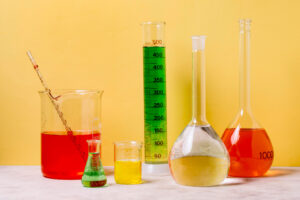
- Beakers are versatile vessels for mixing, heating, and carrying out reactions where precise volume measurement is not critical.
- Erlenmeyer flasks are ideal for mixing by swirling, limiting spillage, and supporting titration procedures.
- Volumetric flasks offer exact volume measurements, which is crucial for solution preparation and quantitative experiments.
- Graduated cylinders provide more accurate volume measurement than beakers, suitable for routine lab measurements.
- Test tubes and culture tubes are essential for parallel experiments, sample storage, and biological assays.
Each piece of glassware fulfills a specific role, and together they create a well-equipped laboratory capable of handling complex scientific work with confidence.
Supporting Safety in Scientific Research
Safety is foundational in laboratory settings. High-quality glassware minimizes the risk of breakage, leakage, and contamination. Features such as uniform wall thickness, precisely molded rims, and smooth surfaces reduce the chances of accidental damage during handling or heating.
Using durable glassware also protects laboratory personnel and helps maintain compliance with safety protocols, which are especially important in regulated research facilities.
Consistency and Reproducibility in Research Outcomes
Scientific research demands repeatable results. Whether conducting experiments under controlled conditions or preparing samples for analytical instruments, reproducibility depends on tools that perform consistently. Standardized laboratory glassware with reliable markings and predictable behavior helps researchers minimize variability and focus on data integrity.
Glassware for Diverse Scientific Disciplines
Laboratory glassware is essential across many fields:
- Chemical Research: Reaction vessels, condensers, and distillation glassware.
- Pharmaceutical Development: Precise volumetric tools and standardized vessels for formulation and testing.
- Biological Studies: Culture tubes, Petri dishes, and sample containers.
- Environmental Analysis: Glassware for sample preparation and pollutant testing.
- Educational Laboratories: Durable, versatile glassware suited for repeated student use.
Each discipline places specific demands on glassware quality, and choosing the right products ensures that research protocols proceed without compromise.
Choose the Right Laboratory Glassware Supplier
Selecting laboratory glassware is a strategic decision for research labs and institutions. Quality, material strength, and supplier reliability all influence experimental success. Labs benefit greatly when working with manufacturers who understand scientific standards, export quality requirements, and long-term performance expectations.